
Google is putting Gemini 4 Argon in the hands of selected cyber defenders before regular customers can buy it. That order matters more than another benchmark win. Frontier releases are turning into controlled security programs, and the public API shows up later. The other three items today circle the same problem: protein provenance, automated code defense, and a White House promise with no legal teeth.
🛡️ Gemini 4 Argon starts behind the Fairwind gate

Google DeepMind announced Gemini 4 Argon on September 30. Koray Kavukcuoglu, SVP at Google DeepMind and Google’s chief AI architect, wrote that the first rollout goes to a set of trusted cyber defenders through the Fairwind Program. Google says it is also engaged in the US government’s voluntary process for pre-release model access. Paid API customers and Google AI Ultra subscribers come next. No date yet.
The pitch is long-horizon work: real-world software engineering, enterprise knowledge work like legal and finance, and cyber defense. Argon’s output limit jumps from 64,000 tokens to 1 million, room for very long single-pass reasoning. Introductory API pricing is $2 per million input tokens and $10 per million output tokens, with cached input 95% off. Once the intro period ends, Google says the price becomes $4 and $20.
Google’s benchmark sheet puts Argon ahead of GPT-6 Astra, Claude Fable 5.1 and Claude Opus 5.5 on many published tests, though not all. I treat those as vendor claims until someone else reruns them. Wiz reportedly used Argon to find a critical vulnerability in software used by hospitals, one Google says other frontier models missed. Ars Technica notes that Google didn’t provide specifics, so nobody outside can check it yet.
Fairwind isn’t starting from zero. It opened earlier with Gemini 3.8 Flash Cyber and CodeMender, and DeepMind’s program page lists more than 650 partners; SiliconANGLE named CrowdStrike and Palo Alto Networks among them. Last week Washington asked labs to keep new frontier models away from British testers until a US security review was done. Then Australia called Altman and Amodei to Canberra after OpenAI paused its most capable tool-using models, and OpenAI held GPT-6.1 Astra back entirely. Argon is the gentler version of that move: ship, but to a vetted list first. Most customers can’t use it yet, and that is the product story.
🧬 SynthID Bio puts a signature inside proteins
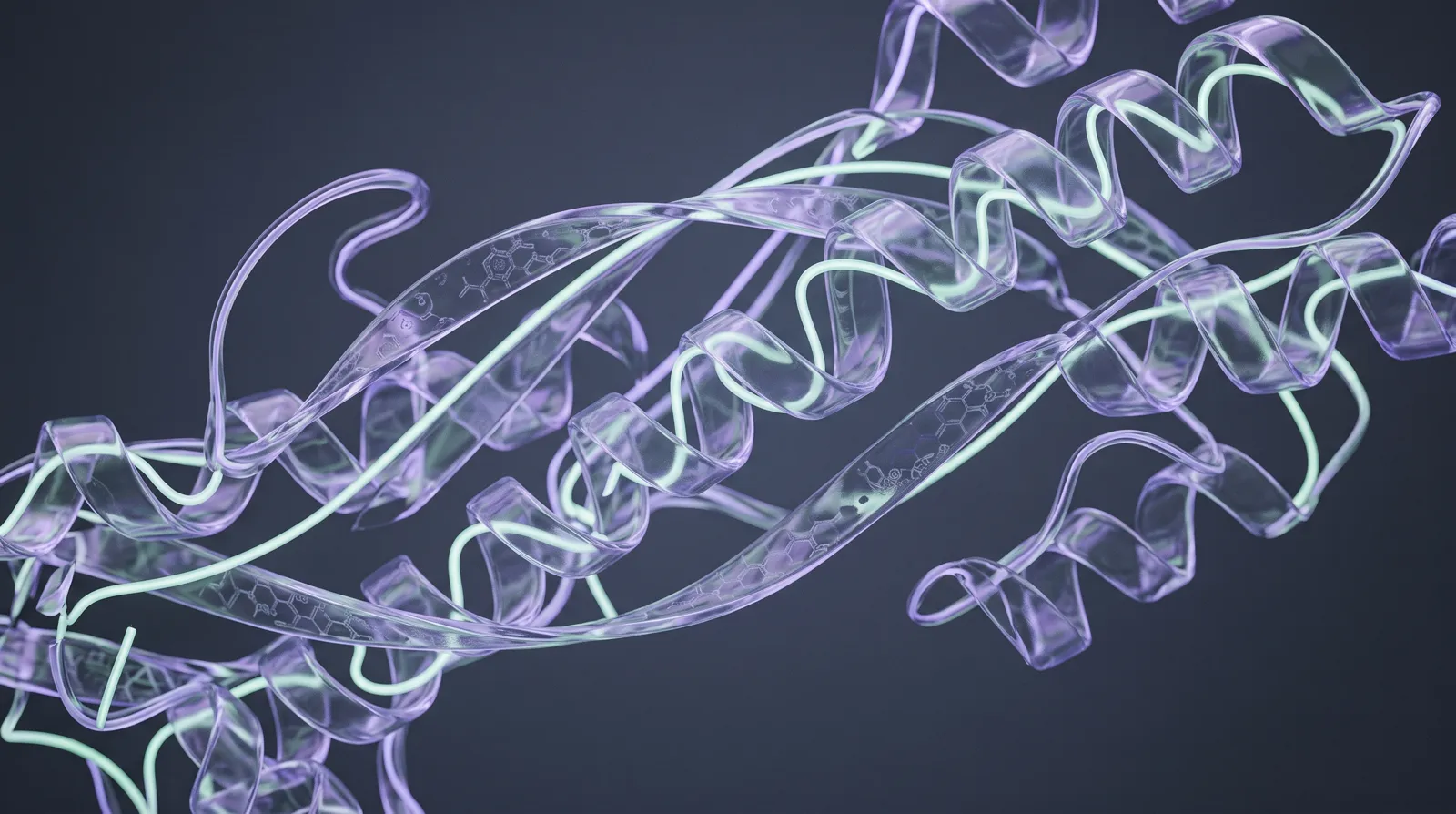
DeepMind also introduced SynthID Bio, a watermark built to survive the trip from AI-generated biological code to a synthesized physical protein without breaking what the protein does in lab tests. For amino-acid sequences it subtly guides which amino acids get picked. For predicted 3D structures it adjusts atomic coordinates.
The wet-lab result is the part I’d underline. Watermarked protein binders built with AlphaProteo and a SynthID-enabled ProteinMPNN matched unwatermarked versions on hit rate, binding affinity and sequence diversity across three targets: VEGF-A, the SARS-CoV-2 spike RBD and PD-L1. On the folding side, DeepMind fine-tuned a small part of AlphaFold 3’s diffusion network so the predicted coordinates carry a detectable signature.
The obvious customer is DNA synthesis screening. A signature could tell a screener that an unfamiliar sequence came from a model with built-in safeguards. It could also help flag AI-generated entries headed for PDB, UniProt or GenBank. DeepMind itself calls this one layer in a Swiss-cheese defense, says no single intervention is a silver bullet, and lists tamper resistance as open work.
With DeepMind, Stanford’s Hie lab and Arc Institute put SynthID Bio into Evo 2 and watermarked the genome of an Evo 2-designed bacteriophage; early tests in bacteria cultures show those phages are functional. DeepMind is publishing the methods paper and open-sourcing the code, in vitro data and weights for researchers. Image and audio watermarking was mostly a media problem. This one ends at a lab bench.
🔧 Codex Security keeps watch on GitHub
OpenAI is moving Codex Security Cloud from on-demand scans toward continuous monitoring of connected GitHub repos and their new commits. The loop, per OpenAI’s help page: investigate a suspected vulnerability, try to reproduce it in an isolated environment, then propose a patch for a human to review. It doesn’t change your code on its own.
There’s also a Codex Security CLI for local and CI runs, and Daybreak Blue defensive models now come included by default in the cloud product, which a September 29 OpenAI post quoted by IBTimes called a major upgrade. Scale figures come from OpenAI’s August security update: more than 30 million commits across over 30,000 codebases, over 500,000 findings automatically marked fixed, and another 70,000-plus marked fixed by people. OpenAI’s own numbers, with no controlled comparison behind them.
Codex Security Cloud already had the best numbers of the day in yesterday’s DevDay takeaways.
It’s still a research preview, open to ChatGPT Enterprise, Edu, Business and Pro, and it connects to GitHub repositories today. Always-on scanning makes a bad finding or a bad patch more expensive, too. A person at the merge button is a sensible control and a convenient liability line at the same time. Same week, two gates: Google limits who gets the model, while OpenAI lets the model draft the fix and stops at the pull request.
📜 Washington’s moral promise meets an FTC file request
Six tech leaders signed the Joint Commitment on Frontier Responsibilities after the September 29 White House roundtable: Sundar Pichai, Dario Amodei, Mark Zuckerberg, Greg Brockman, Elon Musk and Jensen Huang. Per The Verge, the text has four points: internal controls that monitor models, an internal team that checks those controls work, an independent external auditor or evaluator, and a board committee overseeing all of it. Donald Trump called it “morally binding.”
Morally is carrying a lot of weight there. No enforcement mechanism, no deadline, and per CoinDesk no requirement to publish or name the auditors. A board can oversee a process the public never sees.
Then came the paperwork. On September 30, Reuters, citing the New York Post, reported that the FTC is preparing formal information demands for Anthropic, OpenAI and others over product safety and consumer protection after recent cyber incidents. Those civil investigative demands work much like subpoenas. Bloomberg reported that FTC Chair Andrew Ferguson attended the White House meeting.
I read the pact and the probe as one credibility story. In the pact, companies write their own promise. An FTC demand builds a record outside their press releases. Neither makes an agent safer by itself. Only one can compel answers.
Defender-first access, protein watermarks, continuous repo checks, and a promise that is moral rather than legal. Some of this week is real safety plumbing; some is announcement noise. I’d pick the tooling, ask who can verify it, and keep an eye on the paperwork.
